It may be demanded how it came to pass that so many wicked persons and profane people should so quickly come over into this land.… There were sent by their friends some under hope that they would be made better; others that they might be eased of such burdens, and they kept from shame at home that would necessarily follow their dissolute courses.
—William Bradford, Of Plymouth Plantation
In the early summer of 1619, Samuel Moore had taken his lawsuit against Katherine Moore to the Court of Audience, one of the courts of the Archbishop of Canterbury. Katharine fought the case stubbornly in an attempt to obtain a better settlement for her and the children. Samuel had to actually pay all of her legal fees and complained of “many comissions upon new & frivlous allegacons“.
By June the case was settled and Samuel More obtained a decree of ‘divortium a mensa a thoro‘ – which literally meant a separation from bed and table. This was not a divorce as we know it today, but a legal separation. Samuel retained his rights over the children, but Katherine’s rights over Larden Hall were completely stripped away and Samuel could only remarry if she died.
Over the next year Katharine appealed the separation through the High Court of Delegates, as Samuel accused her of crying “Crocadills teares.” She insisted that her family had brought good money to the marriage. Yet Samuel argued that her family gave less than was promised in the arrangement of their marriage, as agreed upon between his father Richard and her father Jasper, providing only one hundred pounds a year.
It has been said that the opposite of Love is not hate, but rather indifference. Samuel More in fact could not have cared any less about Katherine’s appeal or the children and never even attended any of the proceedings, despite one of the case lawyers asking that he be threatened with excommunication if he continued to not be present.
In June of 1620, Samuel More accompanied his employer Lord Zouche (head of the Privy Council and a commissioner for The Virginia Company) to Bath in Somerset England, where on July 8th Katherine More’s four years of legal appeals in an attempt to regain custody of her children had finally been exhausted and was now officially over.
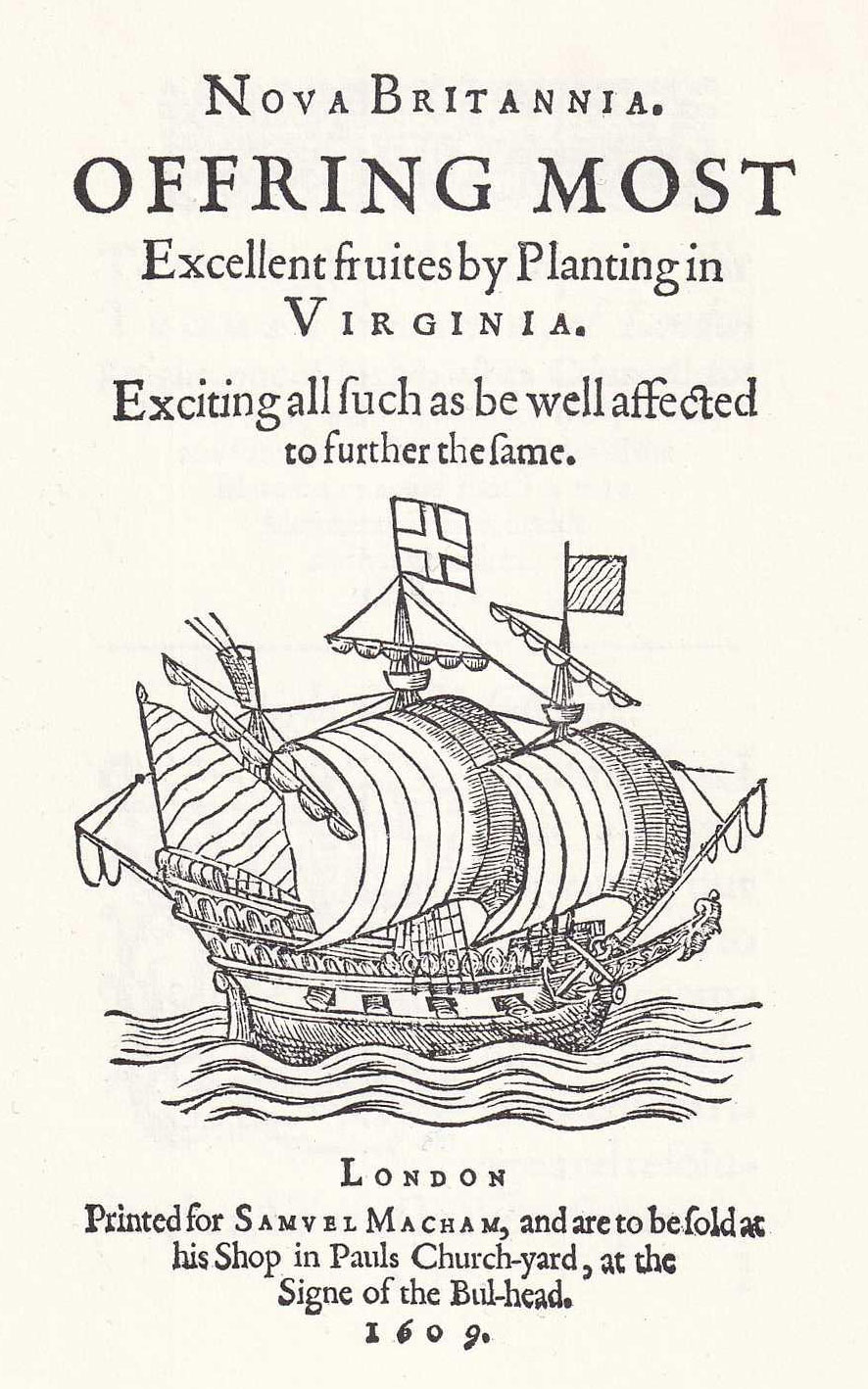
The Virginia Company began sending children to the New World in 1618. There was a severe shortage of labor in Virginia; the large number of indigent children on the streets of London were responsible for much disorder and petty crime. An agreement was reached between the Company and the Common Council of London whereby boys and girls between the age of 6 and 16 and having “no means of living or maintenance” were to be taken to Virginia and apprenticed as the Company saw fit.
The cost of transportation and clothing, £5 per child, was to be paid by the City. Seventy five boys and twenty four girls were sent out in three ships during the winter of 1618-19, and many more during 1620, by which time the children had to be at least 12. Transportation to Virginia was commonly regarded as a death sentence, as most died on the voyage over or shortly upon arrival. Many of the children were rounded up on the streets; poor parents who refused to surrender their children were told they would receive no more parish relief. Legal objections to transportation against the will of the children were overridden by Lord Zouche of the Privy Council.
The Virginia Company was in severe financial straits and could not provide what the Pilgrims wanted most of all: free shipping. For this they turned to Thomas Weston, a member of the Ironmongers’ Company, he was a businessman who sought profit wherever opportunity offered. With his financial backing they and the ‘adventurers‘, as the participating merchants recruited by Weston were called, formed a joint-stock partnership, the terms of which were not unlike those of other ventures in Virginia and Bermuda. Each settler over sixteen contributed £10 for a single share, and if he provided £10 worth of provisions he was entitled to a double share. The partnership was to be for seven years, during which time all profits, from whatever means, were to remain in the common stock, save that the settlers would be furnished with food, clothing and provisions from it. At the end of that time the entire capital and profits were to be divided.
As an early supporter of the Virginia Company since 1609, Lord Zouche had to have been aware of what happened in Jamestown Virginia during the ‘starving time’. When in the winter of 1609-1610 only 60 out of 214 colonists survived. Those who did ate rats, snakes, horses, their own shoes and even other people. As forensic evidence discovered in 2013 indicated that cannibalism had actually occurred there.
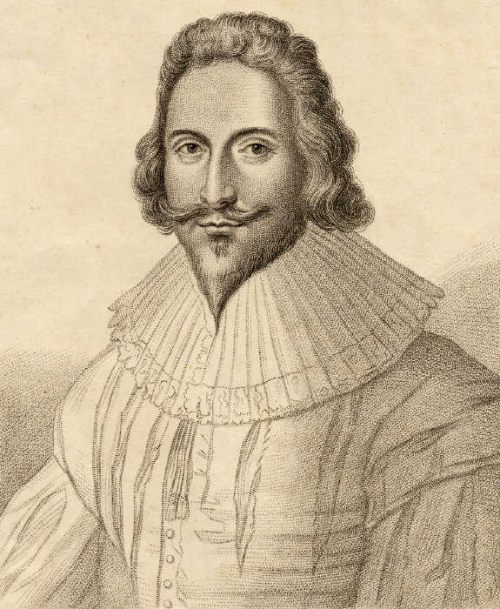
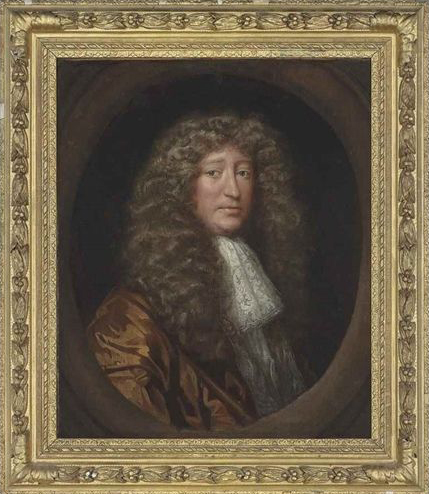
Samuel More paid a hefty £100 (over double the cost for each child) to place all four children; Elinor, Jasper, Richard and Mary “such a spurious broode” (as he referred to them); onboard the Mayflower as indentured servants in the hands of “honest & religious people”. Well above the standard price, just to rid himself of their existence. However if they were still alive in seven years, they would become equal members of the originally destined Virginia colony and each be given 50 acres of land upon completion of their contracts of servitude.
In July ao dm 1620 by the appointmt and direccon of the said Samuell More the fower children of the petitioner Katherine More were brought up to London by a servant of the father of Samuell and delivered to Philemon Powell who was intreated to deliver them to John Carver and Robert Cushman undertakers for the associates of John Peers for the planatacon in Virginia.
The same month and year the said carver and Cushman received the Children and did covenant and agree to transport them into Virginia & to see that hey should be sufficiently kept and maintained with meate drinke apparel lodginge and other necessaries and at the end of seaven Years should have have 50 acres of land a peece in the Countrey of Virginia for performance whereof they entered into articles and they together with one Mr Weston an honest and sufficient merchant have bond to Mr Paul Harries cosin germane of the said Samuell in the some of 120 li (£120) as by the articles of agreement and bond more at large appeareth the said Paul Harris being intreated as a friend in trust to take the bond and Articles in his name the said Samuell being at that time with his Lord at Bath. (Samuel’s ‘Lord’ was Lord Zouche.)
—Samuel More’s statement, from the 1621 legal document found in the attic of Linley Hall by his descendant Jasper More, 1959.
Immediately after the news that Katherine’s custody appeal was now formally over, Samuel More sent word to his cousin Paul Harris in Shipton (who was also his Father’s lawyer) to transport all four children to London and hand them over to Philomen Powell, an associate of Thomas Weston, merchant adventurer and organizer of the Mayflower voyage. At whose home in Aldgate they then stayed for approximately one week, before being split up and placed by Robert Cushman in the custody of the various Pilgrim families as indentured servants.
Sixty four years later, on September 27th 1684, Richard More provided deposition from what he could remember about his life. Giving his age as “seaventy yeares or thereabouts” he attested “that being in London at the house of Mr. Thomas Weston, Ironmonger in the year 1620. He was from thence transported to New Plymouth in New England”.
William Bradford would later detail how the More children; Ellen, Jasper, Richard and Mary (who he mistook for Richard’s younger brother) were each indentured to the families of John Carver, William Brewster and Edward Winslow
“The names of those which came over first, in year 1620 and were by the Blessing of God the first beginners and (in a sort) the foundation of all the Plantations and Colonies in New-England; and their families.”
- Mr. John Carver; Kathrine, his wife; Desire Minter ; & 2. man-servants, John Howland, Roger Wilder ; William Latham, a boy ; & a maid servant, & a child was put to him, called Jasper More.
- Mr. William Brewster; Mary, his wife; with 2. sons, whose names were Love & Wrestling ; and a boy was put to him called Richard More ; and another of his brothers (Mary).
- Mr. Edward Winslow ; Elizabeth, his wife ; & 2. men servants, called George Soule and Elias Story ; also a little girl was put to him, called Ellen, the sister of Richard More.
—William Bradford, Of Plymouth Plantation
How could anyone take four very young children, age eight, seven, five and three, from their own mother and pay double to put them on a ship filled with ‘Saints’ and ‘Strangers’ headed for the New World, despite knowing that they probably each would die? Yet had this historically not occurred, I wouldn’t be here over 400 years later to wonder. So when I think of my own life and family, I can only conclude that Love is what ultimately endures.